Build Public Speaking Skills: A Step-by-Step Roadmap
A practical plan for moving from stage nerves to confident delivery, with the clubs, courses and portfolio evidence hiring managers can actually check.
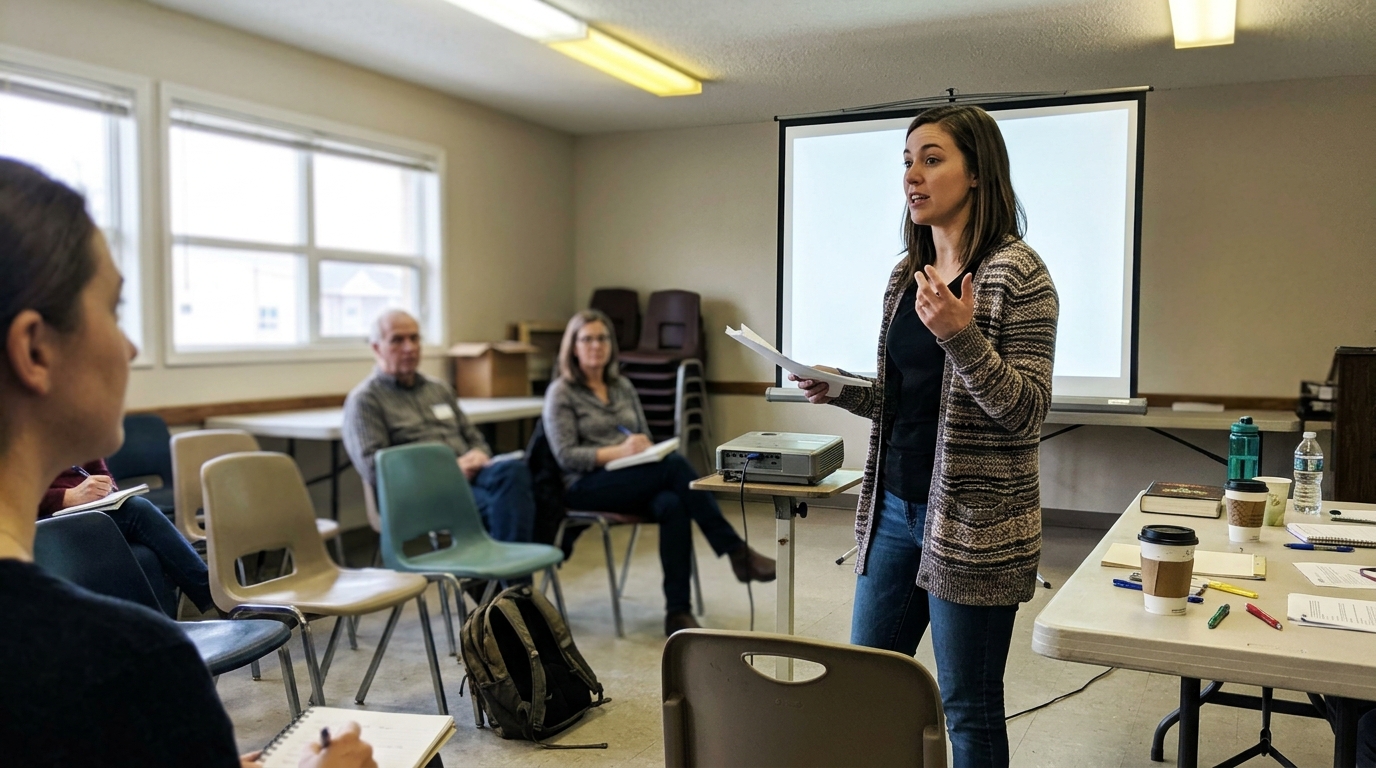
Public speaking is a trainable skill, not a personality trait. Over roughly six to twelve months of structured reps — recorded practice, a club that gives you a live audience every week, and one or two real talks with something at stake — you can go from avoiding presentations to volunteering for them.
This roadmap lays out the sequence, the named programs worth considering at each price point, and the specific evidence that convinces a hiring manager you can hold a room.
Why This Skill Matters for Your Career
Speaking well in front of people is a listed requirement for jobs, not just a nice extra. ONET, run by the U.S. Department of Labor, names "Speaking — Talking to others to convey information effectively" as an Essential Skill for training and development specialists, and lists "Oral Expression — The ability to communicate information and ideas in speaking so others will understand" among the abilities the occupation draws on (ONET OnLine, undated).
Training and development specialist. The U.S. Bureau of Labor Statistics describes these workers as spending much of their time working with people, giving presentations, and leading training activities (BLS, 2025). In practice that means standing in front of 20 new hires running a half-day onboarding session, demoing a new CRM workflow screen by screen while people follow along, and handling the interruption from the person in row two who says the process doesn't work that way on their team. BLS reported a 2025 median annual pay figure for the occupation and projects employment to grow 11 percent from 2025 to 2035, which it calls much faster than the average for all occupations (BLS, 2025); check the Occupational Outlook Handbook for the current pay figure, since it varies widely by state and industry.
Public relations specialist. BLS notes that PR specialists usually work in offices but also deliver speeches, attend meetings and community activities, and occasionally travel (BLS, 2025). The work looks like briefing a client's executive before a local TV interview, speaking at a community meeting about a construction project, and fielding reporters' follow-up questions without going off-message. BLS also reported a 2025 median annual pay figure for this occupation, and both roles typically require a bachelor's degree to enter (BLS, 2025).
The same skill carries into sales engineering, teaching, project management and consulting — anywhere a decision depends on whether a room understands you the first time.
Skill-Building Roadmap
- Record a baseline, Weeks 1-2. Film three five-minute talks on your phone: explain your job to a stranger, pitch a project, tell a story about a work problem. Watch each once for content and once with the sound off for posture and hands. Count filler words per minute and write the number down.
- Join a club for weekly live reps, Weeks 1-4. Visit two or three Toastmasters International clubs as a guest before joining; formats, meeting times and in-person versus online delivery vary by club. Membership dues are $72 USD per six-month period, due April 1 and October 1, plus a one-time $25 USD new member fee (Toastmasters International, undated). Your first Pathways learning path comes free with membership (Toastmasters International, undated).
- Take a structured course on delivery mechanics, Weeks 3-10. The University of Washington's Dynamic Public Speaking Specialization on Coursera is a beginner-level, four-course program listed at about 2 months at 10 hours a week, aimed at helping learners design and deliver compelling presentations (Coursera / University of Washington, undated). Do the assignments on a real talk you actually have to give.
- Complete Pathways Levels 1 and 2, Months 2-4. Every Toastmasters path has five levels, starting with fundamentals and progressing to demonstrating expertise (Toastmasters International, undated). Levels 1 and 2 force the basics: structure, vocal variety, speaking without notes.
- Take a real internal speaking slot, Months 3-6. Volunteer to run a team lunch-and-learn, a sprint demo, or a 10-minute segment of an all-hands. Ask for a one-page feedback form from attendees so you have data, not impressions.
- Build a speaking portfolio, Months 4-9. Publish two polished recorded talks — one explainer, one persuasive — on a personal page or LinkedIn, with the slide deck attached.
- Add intensive or advanced training, Months 6-12. Either push to Pathways Levels 3-5, or take an immersive program such as the Dale Carnegie Course, offered live online as an 8-session program (Dale Carnegie & Associates, undated). Employer tuition reimbursement rules differ by company — ask before you pay.
- Speak externally, Months 9-12. Submit a lightning talk to a local meetup, industry webinar or regional conference. An external slot is the credential that is hardest to fake and easiest for a hiring manager to verify.
Tools, Courses, and Certifications to Consider
| Option | Provider | Cost | Time commitment |
|---|---|---|---|
| Toastmasters membership + Pathways | Toastmasters International | $72 USD per six-month period plus a one-time $25 USD new member fee; framed as $144 USD per year or $12 USD per month (Toastmasters International, undated) | Weekly or biweekly club meetings, ongoing |
| Additional Pathways learning paths (e.g. Presentation Mastery, Persuasive Influence) | Toastmasters International | First path free with membership; several paths rose by $35 USD starting July 1, 2026 (Toastmasters International, undated) | Five levels per path, self-paced |
| Dynamic Public Speaking Specialization | University of Washington on Coursera | Included with a Coursera Plus subscription; the course page notes a promotional subscription price (Coursera, undated) | Four courses, about 2 months at 10 hours a week (Coursera / University of Washington, undated) |
| Effective Communications and Human Relations (The Dale Carnegie Course) | Dale Carnegie & Associates | US$2,195 live online (Dale Carnegie & Associates, undated) | 8 sessions |
| Phone camera + a timer | Already on your device | None | 20 minutes per rehearsal |
Prices and availability change, and in-person options vary by city, state and country — check each provider's current page before committing.
How to Prove This Skill to Employers
- Publish two recorded talks. One 5-8 minute explainer of something technical in your field, one 5-minute persuasive pitch. Link them from your resume so an interviewer can watch 90 seconds and decide.
- List a completed Pathways level or path by name. "Completed Level 3, Presentation Mastery path, Toastmasters International" is specific and checkable; "member of a speaking club" is not.
- Cite a measurable outcome from a session you ran. Attendance numbers, a post-session quiz score, a drop in repeat support tickets after your training, or an average feedback rating with the sample size attached.
- Name an external speaking slot. A meetup talk, conference lightning talk, panel, or recorded webinar, with the event name and date.
- List completed employer-paid training. If your company funded an 8-session program such as the Dale Carnegie Course, name the program and the year, not just "communication training."
- Hold a club officer or meeting role. Running meetings or evaluating other speakers shows you can give feedback as well as deliver, which matters for training and management tracks.
Common Mistakes to Avoid
- Rehearsing silently in your head. It hides pacing problems and filler words entirely. Fix: stand up, speak aloud at full volume, and time every run-through.
- Memorizing the talk word for word. One dropped sentence derails the whole thing, and recovery looks worse than a rough phrase. Fix: memorize your opening line, your closing line and five beats in between, then improvise the connective tissue.
- Never watching your own footage. Avoiding the recording means you keep repeating the habit you can't see. Fix: watch each practice video once muted, and fix one physical habit per week.
- Buying the expensive intensive before doing free reps. A multi-session program lands far better once you already have a dozen talks behind you. Fix: do eight to ten live reps first, then decide whether you still need the intensive.
- Only speaking to friendly audiences. Your team already agrees with you; a skeptical cross-department audience is where speaking skill actually gets tested. Fix: deliberately book one talk per quarter outside your own department.
- Skipping Q&A preparation. Most speaking failures happen after the slides end. Fix: write down the five hardest questions you could be asked and rehearse answers out loud, under 60 seconds each.
Frequently asked questions
How long until I actually feel comfortable in front of a room?
Noticeable change usually shows up after 10-15 live talks rather than after a set number of weeks, so the pace depends on how often you can get in front of an audience. A club that meets weekly gets you there far faster than waiting for work presentations to appear. Track reps, not months, and re-record your baseline talk at the three-month and six-month marks to see the difference.
Is Toastmasters worth joining if my employer already runs presentation training?
Internal training is usually a one-off workshop, while a club gives you a recurring audience and structured feedback every meeting, which is where the improvement actually comes from. The Pathways program runs five levels per path, so it keeps giving you harder assignments after the basics (Toastmasters International, undated). Visit a couple of clubs as a guest first — culture and meeting quality vary a lot from club to club.
Do employers care about a public speaking certificate?
There is no licensing body for public speaking, so no certificate is required for any US job. What a named program does is give an interviewer something concrete to ask about, and it signals you invested deliberately rather than claiming confidence. A recorded talk plus a measurable outcome from a session you led will carry more weight than the certificate alone.
How do I practice if I work fully remote?
Online clubs and virtual meetups give you live audiences without travel, and camera presence is its own skill worth drilling separately. Practice looking at the lens rather than the gallery, run your deck in presenter mode, and record your rehearsals in the same platform you'll present in. Volunteer to host a recurring internal call so you get regular reps with real stakes.
Sources
- Toastmasters International — Membership Dues and Payments FAQ
- Toastmasters International — Why Toastmasters