How to Become a CDL Truck Driver
From written exams to ELDT behind-the-wheel hours to the road test, here is what a Class A license costs, how long it takes and what the driving work is like.
Becoming a CDL truck driver means passing written knowledge tests for a commercial learner's permit, completing federally required entry-level driver training from a provider on the FMCSA Training Provider Registry, and passing a skills and road test. Getting a CDL takes 3 to 8 weeks (Roehl Transport, undated), and the usual entry-level education is a postsecondary nondegree award with short-term on-the-job training and no prior work experience (U.S. Bureau of Labor Statistics, 2025).
Costs vary widely by route — a public technical college certificate, a private truck driving school, or a paid company-sponsored program that is registered under the ELDT mandate.
What the Job Involves Day to Day
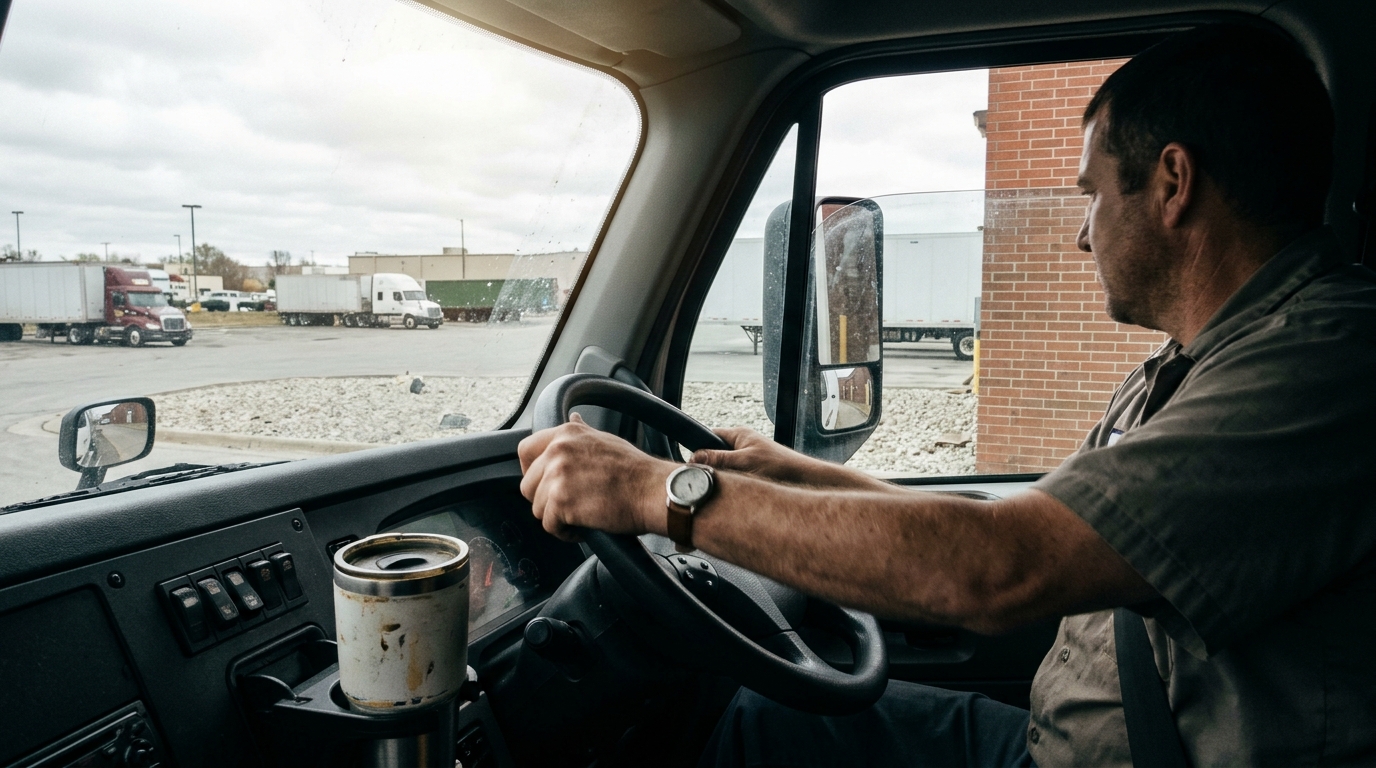
Most of a shift is spent driving long distances, sitting in the cab for hours at a stretch (U.S. Bureau of Labor Statistics, 2025). Before you roll, you inspect the trailer — tires, brakes, lights, coupling — and check mechanical, safety and emergency equipment such as the fire extinguisher and reflective triangles (O*NET OnLine, undated). You secure cargo with ropes, blocks, chains or covers, then check load documentation such as the bill of lading for completeness and accuracy.
On the road you follow traffic laws, record working hours in an electronic logging device as federal and state regulations require, and report delays, breakdowns or incidents to a dispatcher. At the end of the run you inspect the trailer again and log any service or repair needed.
The work is outdoor and physical at both ends of the trip: you climb in and out of the cab, crank landing gear, and open doors in rain, heat and snow. Long-haul drivers sleep in a sleeper berth and may be away for days at a time; local and regional routes return home more often.
Path to Becoming a CDL Truck Driver
- Check age rules (same day). FMCSA requires drivers to be 21 or older to operate a commercial vehicle in interstate commerce or to haul placarded hazardous materials; states may issue a CDL to drivers under 21 for intrastate commerce only (FMCSA, Commercial Motor Vehicle Safety Act of 1986).
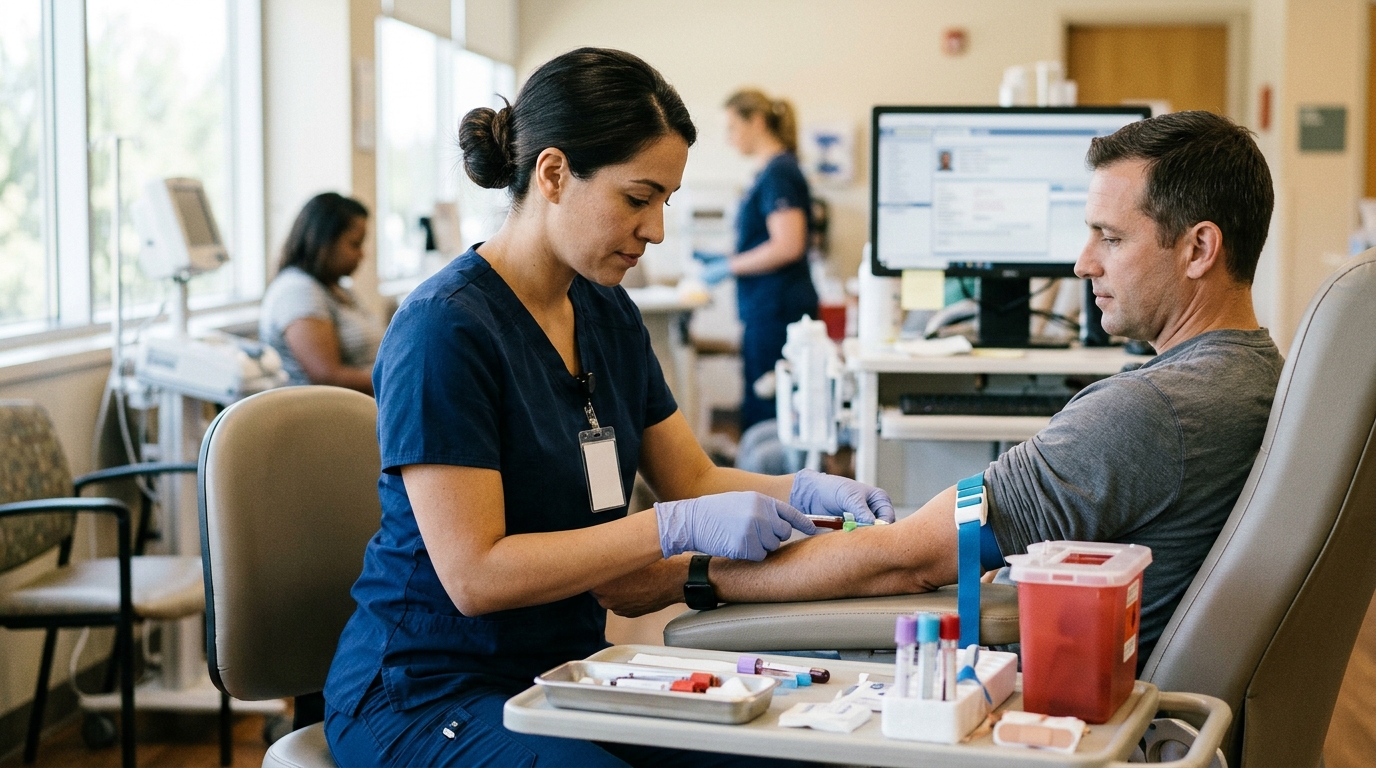
- Pass a DOT physical and get a Medical Examiner's Certificate (1 day, $100 and up). Drivers of interstate vehicles rated over 10,000 pounds must obtain and maintain this certificate and give a copy to the State Driver Licensing Agency (FMCSA, undated; cost example from Guilford Technical Community College, undated).
- Clear the pre-screening paperwork (1–2 weeks). Budget about $45 for a DOT drug screen, around $20 for a non-certified driving record copy, and $1.25 for an FMCSA Drug & Alcohol Clearinghouse query (Guilford Technical Community College, undated).
- Pass the written knowledge tests and get your commercial learner's permit (1–2 weeks of study; permit fee $64 in one college's example). Getting a first CDL requires passing a written test, practicing driving, then passing a road test (New York State DMV, undated).
- Complete ELDT with a registered provider (3–8 weeks). Since February 7, 2022, first-time CDL applicants must complete Entry-Level Driver Training (DC DMV, undated), demonstrating proficiency in both theory and behind-the-wheel instruction under 49 CFR 380, from a provider listed on FMCSA's Training Provider Registry (FMCSA, undated).
- Pass the CDL skills test (1 day). This covers the pre-trip inspection, basic vehicle control and the on-road drive.
- Add endorsements if you want them (1–3 weeks). A hazmat (H), passenger (P) or school bus (S) endorsement earned for the first time also triggers the ELDT requirement (DC DMV, undated).
- Apply to carriers and finish on-the-job training (2–8 weeks). Typical entry-level preparation includes short-term on-the-job training (U.S. Bureau of Labor Statistics, 2025), often riding with a trainer before you are assigned a truck.
Timeline at a Glance
- Weeks 1–2: Book and pass the DOT physical, complete the drug screen, order your driving record and Clearinghouse query, and start studying the state CDL manual.
- Week 2–3: Sit the written knowledge tests and collect your commercial learner's permit (New York State DMV, undated).
- Weeks 3–8: Complete ELDT theory and behind-the-wheel hours with an FMCSA Training Provider Registry provider. Program length commonly runs 4–6 weeks (CostHelper, undated); some run three weeks (DriveBigTrucks citing Truck Driver Institute, 2026) and public certificate programs run 2 months at 222 clock hours (Tennessee College of Applied Technology Northwest via CareerOneStop data, undated).
- Week 4–8: Pass the CDL skills and road test; overall CDL timeline is 3 to 8 weeks (Roehl Transport, undated).
- Months 2–4: Start with a carrier and complete short-term on-the-job training with a trainer (U.S. Bureau of Labor Statistics, 2025).
- Months 4–12: Run solo; add endorsements such as hazmat, which requires being 21 or older (FMCSA, undated).
Requirements Checklist
- Meet the age rule for the work you want: 21+ for interstate driving or placarded hazmat; under 21 is intrastate only where the state allows it (FMCSA, undated).
- Hold a valid Medical Examiner's Certificate and file a copy with your State Driver Licensing Agency (FMCSA, undated).
- Pass a DOT drug screen and have a completed FMCSA Drug & Alcohol Clearinghouse query on file (Guilford Technical Community College, undated).
- Obtain a current copy of your motor vehicle driving record.
- Pass the written knowledge tests and hold a valid commercial learner's permit (New York State DMV, undated).
- Complete ELDT theory and behind-the-wheel instruction with a provider on FMCSA's Training Provider Registry, before the skills test (FMCSA, undated).
- Pass the CDL skills test: pre-trip inspection, basic controls and road drive.
- Have a high school diploma or GED if an employer asks for one; the occupation's education rating is 1 of 4, meaning a diploma/GED or no diploma is usually needed (O*NET OnLine / My Next Move, undated).
Education and Cost Comparison
| Route | Cost | Duration | Pay context |
|---|---|---|---|
| Public technical college certificate (example: Tennessee College of Applied Technology, Shelbyville) | $2,048 tuition and fees plus $448 books and supplies (CareerOneStop data, undated) | 2 months full-time, 222 clock hours | Occupation median $58,640 a year, or $28.19 an hour (U.S. Bureau of Labor Statistics, 2025) |
| Public technical college certificate (example: Tennessee College of Applied Technology, Morristown) | $1,688 tuition and fees plus $540 books and supplies (CareerOneStop data, undated) | 2 months full-time, 222 clock hours, Certificate credential | Same occupation median of $58,640 (U.S. Bureau of Labor Statistics, 2025) |
| Community college Class A course (example: Guilford Technical Community College) | $1,172 tuition and fees, plus $64 permit, $100+ DOT physical, $45 drug screen, ~$20 driving record, $1.25 Clearinghouse query (Guilford Technical Community College, undated) | Varies by term | Same occupation median of $58,640 (U.S. Bureau of Labor Statistics, 2025) |
| Private truck driving school | Flat fee of $3,000 to $10,000 (Roehl Transport, undated); $1,000 to $7,000 more broadly (CostHelper, undated) | 3 to 8 weeks to CDL (Roehl Transport, undated) | Same occupation median of $58,640 (U.S. Bureau of Labor Statistics, 2025) |
| Company-sponsored paid training | Example: a four-week program in Springfield, MO priced at $3,500 (CostHelper, undated); some schools start at $225 out of pocket after funding (DriveBigTrucks citing Truck Driver Institute, 2026) | 3 to 4 weeks | Trainee pay varies by carrier; check the carrier's current posted rates |
Frequently asked questions
Can I get a CDL at 18?
States may issue a CDL to drivers under 21, but only for intrastate commerce. FMCSA requires drivers to be 21 or older to operate a commercial vehicle in interstate commerce or to transport hazardous materials requiring placards (FMCSA, Commercial Motor Vehicle Safety Act of 1986). Check your own state driver licensing agency for its minimum age and any route restrictions.
Is company-paid training better than paying for a school?
The main difference is money up front: a private school typically charges a flat $3,000 to $10,000 for the whole program (Roehl Transport, undated), while one company program in Springfield, MO runs four weeks at $3,500 (CostHelper, undated) and carriers often pay you during training. Company-sponsored and paid on-the-job programs can produce a CDL without a traditional school, provided the program is registered with the FMCSA Training Provider Registry under the ELDT mandate (Roehl Transport, undated). Company training usually comes with a contract to drive for that carrier for a set period, so read the terms before signing.
What is ELDT and do I have to do it?
Entry-Level Driver Training has been required since February 7, 2022 for anyone getting a CDL for the first time, upgrading a Class B to a Class A, or earning a first passenger, school bus or hazmat endorsement (DC DMV, undated). You must show proficiency in both the theory and the behind-the-wheel portions of the curriculum in 49 CFR 380, finished before you take the skills test, with a provider listed on FMCSA's Training Provider Registry (FMCSA, undated).
Will there be work once I have the license?
Heavy and tractor-trailer truck driving accounted for 2,221,200 jobs, with employment projected to grow 4% from 2025 to 2035 and about 214,500 openings a year on average (U.S. Bureau of Labor Statistics, 2025). Many of those openings come from drivers leaving the occupation rather than new positions. Demand still varies by freight type and region, so compare local carrier postings before you choose a school.
Do I need a high school diploma?
The occupation's education rating is 1 of 4, meaning a high school diploma or GED — or no diploma at all — is usually what is needed (O*NET OnLine / My Next Move, undated). The typical entry-level credential reported for the job is a postsecondary nondegree award with short-term on-the-job training and no related work experience (U.S. Bureau of Labor Statistics, 2025). Individual carriers set their own hiring standards, so some will still ask for a diploma.
Sources
- U.S. Bureau of Labor Statistics — Heavy and Tractor-Trailer Truck Drivers : Occupational Outlook Handbook (2025)
- O*NET OnLine — 53-3032.00 - Heavy and Tractor-Trailer Truck Drivers